We didn’t start using story points because we wanted to be “more Agile.”
We started using them because our sprint planning kept breaking down.
Every Tuesday, we saw the same painful pattern: velocity looked acceptable, our predicted capacity seemed logical, and tasks were “estimated.” But the moment someone asked why a simple task ballooned into six hours of work, or why QA tickets slipped into the next sprint, or why we committed to more hours than we actually had, the room went still.
It wasn’t incompetence. It wasn’t lack of discipline.
It was the fact that hours kept lying to us.
So someone finally said what everyone was thinking:
“Maybe we should try story points.”
We weren’t thrilled. We joked about it. Then we tried.
That’s when everything shifted.
Why Hours Fail (And Everyone Knows It Quietly)
Hour-based estimation only works in a fantasy world where tasks are fully understood before you start, nothing unexpected appears, and every team member works with identical speed and clarity. But real work is unpredictable. A small feature turns out to depend on legacy code no one touched in years. A “simple” UI update triggers unexpected changes in Figma or a thread of clarifications. QA takes longer because a browser update suddenly breaks a component.
Hours assume precision where none exists.
Story points, in contrast, acknowledge the truth: complexity is fluid, and uncertainty is part of the job.
So What Are Story Points — In Real Human Terms?
A story point is simply a relative measure of effort. It blends difficulty, risk, unknowns, and the size of the work into a single number. Instead of pretending a task is a 3-hour job, the team compares it to something familiar and asks: “Is this heavier or lighter than the baseline task we already completed?”
That small change shifts the conversation from imagined precision to honest evaluation.
The Moment Story Points Actually Made Sense for Us
Once we introduced the Fibonacci scale — 1, 2, 3, 5, 8, 13 — things became clearer. The scale forced us to stop pretending that we could distinguish between a “4” and a “4.5.” Planning Poker made the process even more honest: everyone would pick a number privately and reveal it at once. Whenever someone chose a very small estimate while another picked a much larger one, the question naturally became: “What do you know that I don’t?”
Those conversations revealed that disagreements were rarely about the effort itself. They were about assumptions nobody voiced. Story points exposed those assumptions instantly.
Velocity: The First Predictable Part of Agile
After just a few sprints, we noticed that our velocity — the actual volume of effort completed each sprint — stabilized on its own. We didn’t chase it or optimize it. We simply observed it and realized that this number reflected the team’s real rhythm.
Planning stopped being a debate. It became calibration.
We stopped overcommitting, stopped padding estimates, and started shipping consistently — and with noticeably less stress.
Try Story-Based Planning in doBoard
If your team struggles with unpredictable sprints, you can try story-point planning inside doBoard in under 10 seconds. No setup, no learning curve — just clarity.
Get started for free
Why Story Points Work Better Than Hours
Story points improve planning not because they’re “Agile,” but because they shift the focus to what truly matters. Instead of arguing about hours, teams discuss the actual nature of the work. They surface assumptions early, evaluate effort more honestly, and notice potential risks long before they turn into blockers. Unrealistic expectations become easy to detect. The team’s energy is protected instead of drained.
In short: hours judge people.
Story points align them.
A Simple Way to Start Using Story Points
The easiest way to adopt story points is to pick one task your team considers small and familiar, and use it as your baseline. Every new task is then judged by how much heavier or lighter it feels compared to this baseline. Precise time predictions stop mattering — instead, you evaluate effort in broad, realistic ranges.
Whenever the team disagrees, estimate together. Joint estimation brings hidden complexity to the surface quickly. And after a couple of sprints, you’ll know your velocity — the natural pace at which your team delivers. That single insight makes sprint planning calmer, clearer, and significantly more accurate.
No certifications. No overcomplicated frameworks. Just practical estimation that respects reality.
How doBoard Makes Story-Point Planning Smoother
Story points work best when they’re part of your daily workflow. In doBoard, estimation becomes native to the task itself, not something trapped in a spreadsheet. You can assign effort values directly to tasks, watch velocity update automatically with each sprint, and understand how work connects to priorities. Blockers stand out early, and progress is displayed visually so the entire team can stay aligned.
See how story-point planning looks inside doBoard
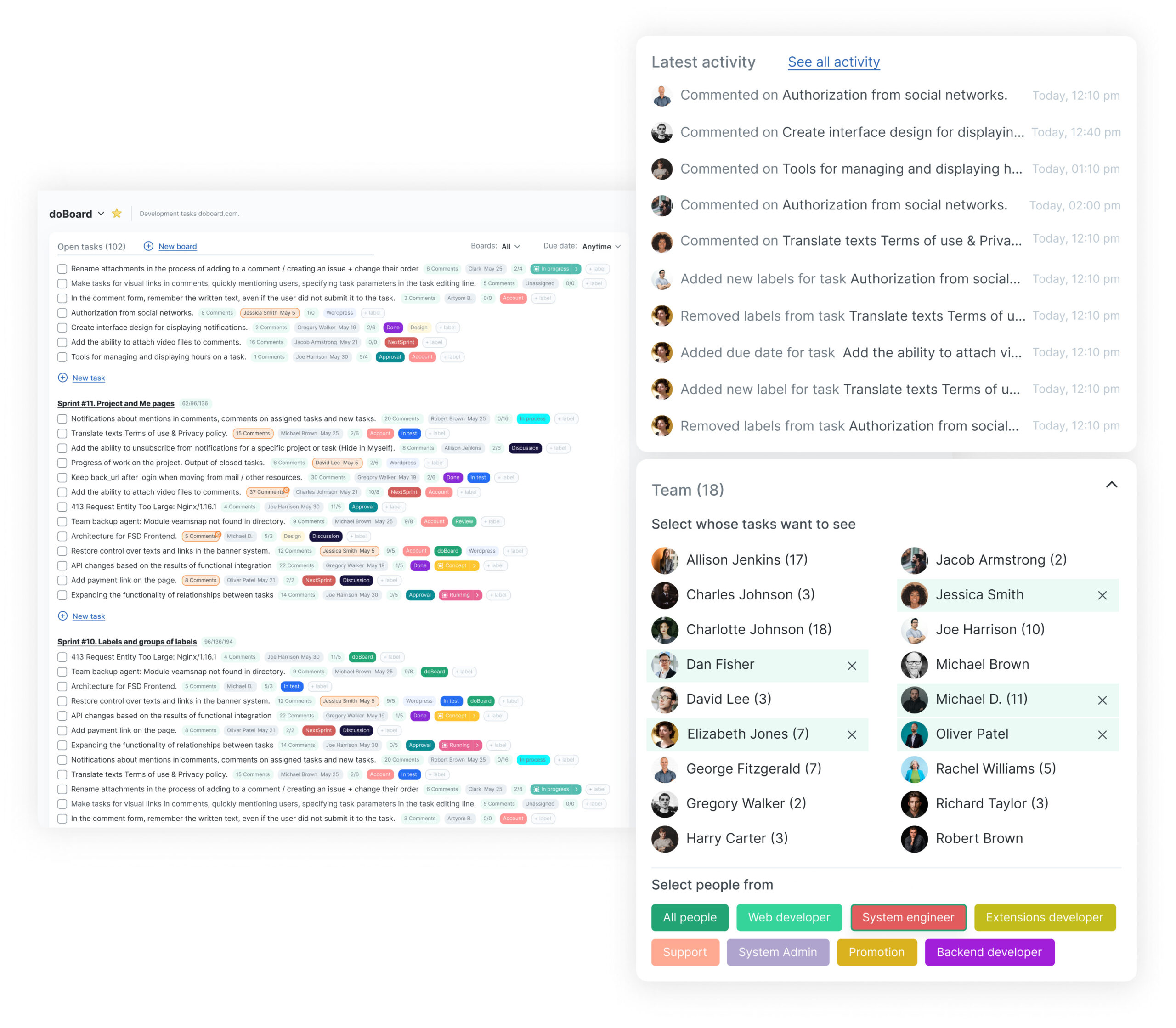
Inside doBoard, estimation is visual. Effort scoring is built into your task flow, velocity updates without manual calculations, and blockers reveal themselves long before they slow down the sprint. This makes planning predictable and collaborative.
Try this workflow in doBoard — free forever.
Why Story-Point Articles Go Viral (And Why This One Should Too)
Articles about story points resonate because they speak directly to the industry’s biggest frustrations: deadlines that collapse under their own weight, sprint plans that fall apart despite good intentions, and the silent stress of having to justify “why something took longer.” Teams want clarity without burnout, and managers want predictability without micromanagement.
Story points offer both.
This article gives readers what the best-performing content in the niche provides: simple explanations without jargon, real-life scenarios they instantly recognize, practical steps they can apply today, and a workable system they can test immediately — especially with a tool built for this purpose.
The Part People Rarely Admit Out Loud
Time-based estimates aren’t planning — they’re theatre. They look pretty in spreadsheets and slide decks, but they crumble the moment real work begins. Story points don’t eliminate uncertainty, but they transform uncertainty into something manageable. They allow teams to align around effort instead of false precision.
That makes the entire sprint healthier.
Start Story-Based Planning in doBoard Today
If estimating tasks feels stressful or inconsistent, story points can change that. And doBoard makes the transition frictionless. You can estimate visually, understand your team’s actual pace, and plan sprints based on reality — not hope.
Start for free — build your first story-point sprint in minutes.
Your future sprints will feel lighter, calmer, and far more predictable — and your team will stay aligned without needing to chase estimates.

Throughout my career, I’ve led projects in FMCG, retail, and e-commerce — from launching mobile apps to optimizing advertising and implementing CRM systems.
I’m passionate about data-driven marketing and enjoy turning complex challenges into clear, effective strategies.
- WordPress Website Maintenance Checklist - September 29, 2025
- Editorial Calendar for SEO: Plan Content Strategy Smarter - September 28, 2025
- Why Website Owners Struggle With SEO and How doBoard Helps - September 23, 2025
Pingback:Personal Productivity Apps – How Effective They Really Are? - doBoard blog